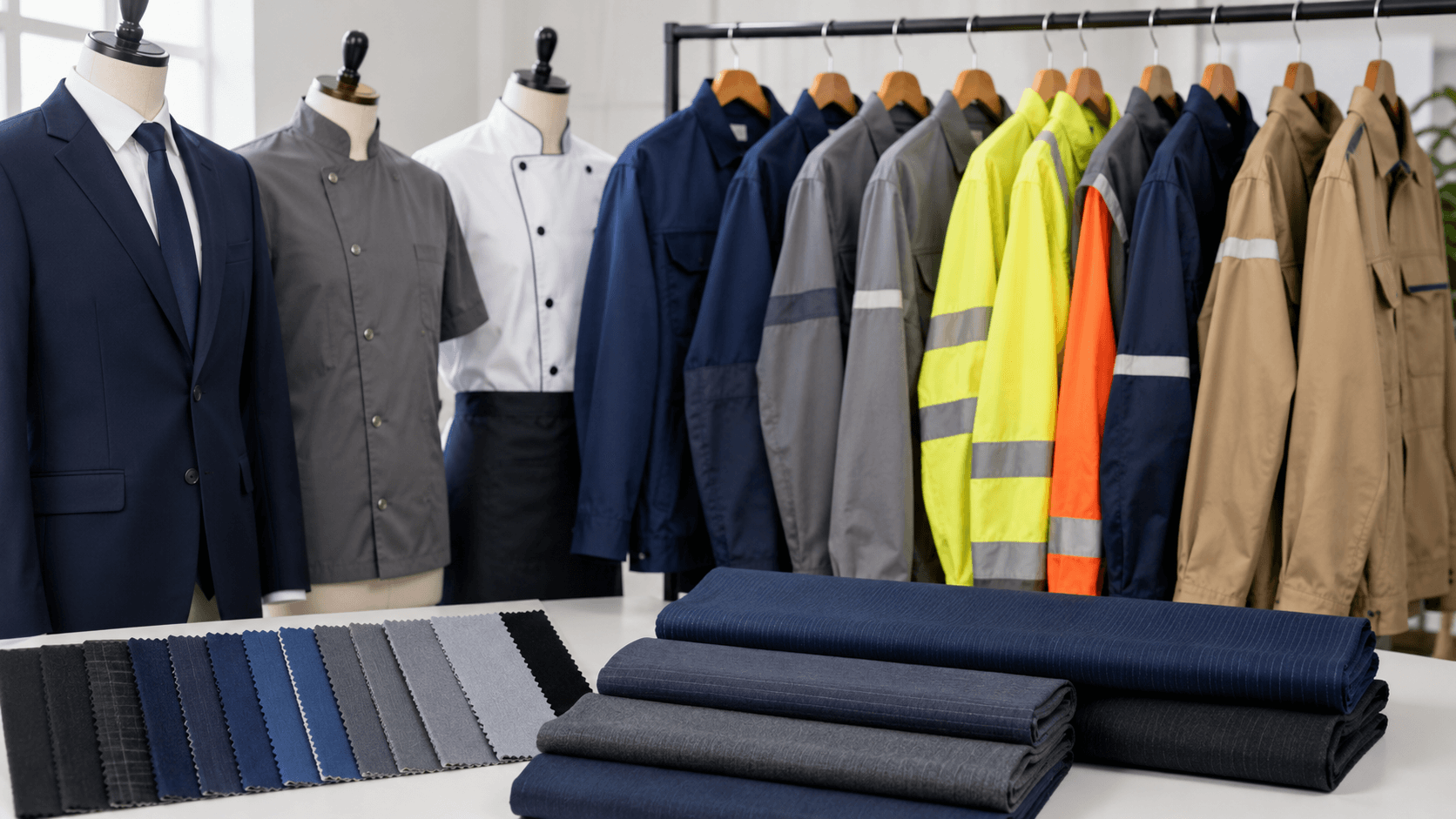
How to Choose Suiting Fabric for Uniform and Workwear Production
May 20, 2026iFondo Fabric Guide

Suiting fabric for uniforms is different from fashion-only suiting. Uniform and workwear programs usually need stable appearance, repeatable color, durability and a fabric handfeel that works across many sizes and garment types.
Composition Choices
Composition affects price, drape, durability and care performance.
- Wool polyester blends can provide a more formal appearance with improved durability.
- Polyester rayon spandex blends can offer drape, comfort and stretch.
- Polyester-heavy fabrics can be practical for cost-sensitive uniform programs.
- Spandex can improve comfort but should be checked for recovery.
Weight and Structure
Fabric weight should match the target garment and climate.
- Blazers often need more structure than shirts or lightweight trousers.
- Trousers require suitable abrasion resistance and shape retention.
- Heavyweight fabric can feel premium but may not work for warm climates.
- Herringbone, twill and plain structures create different visual effects.
Color and Repeat Orders
Uniform buyers often need repeat production, so color control matters.
- Keep approved color standards for repeat orders.
- Confirm whether the fabric is ready stock or make-to-order.
- Ask how close future batches can stay to the approved sample.
- For large programs, confirm color before cutting bulk garments.
Questions Before Quotation
A clear quotation request should connect fabric choice to the final garment.
- Will the fabric be used for blazers, suits, trousers, skirts or uniforms?
- What handfeel is expected: soft, crisp, drapey or structured?
- Is stretch required?
- What is the target color, width, weight and order stage?
How iFondo Supports Buyers
iFondo supplies suiting fabric options for suits, uniforms, blazers and trousers.
- Buyers can share a target swatch, garment photo or technical specification for fabric comparison.